When clean water or plumbing runoff breaches your floors, ceilings, or drywall, acting with speed and precision is vital. Homeowners facing an unexpected leak often ask: What are the most effective water damage cleanup tips to save my property, prevent toxic mold, and protect my structural framing?
Following an organized cleanup plan prevents minor plumbing spills from turning into catastrophic structural rot. Below is our comprehensive guide to practical water damage cleanup tips, safety guidelines, moisture extraction principles, and knowing when to bring in professional equipment.
1. Prioritize Electrical and Personal Safety
Before grabbing towels or turning on equipment, assess the space for immediate safety risks:
- Cut Electrical Power: If standing water reaches baseboards, electrical outlets, or extension cords, go directly to your breaker box and shut off power to the affected rooms. Never step into pooling water while electrical currents are live.
- Identify the Water Category: Water from clean supply lines or leaking sinks is Category 1. However, water from overflowing washing machines, dishwashers, or flowing in from storm events contains organic debris and chemicals. If your home experiences sewer backup, do not attempt DIY cleanup—refer immediately to specialized sewage water cleanup protocols.
- Wear Personal Protective Equipment: Wear rubber-soled boots, water-resistant gloves, and an N95 mask if dust or early fungal spores are present.
Dealing with an Active Water Emergency?
Standing water absorbs rapidly into porous subfloors and drywall studs. Our dispatch team is available 24/7 across Greater Houston to extract standing water and stabilize framing.
📞 Call (832) 849-4218 for Rapid Assistance2. Eliminate Standing Water Quickly
The faster standing water is removed, the lower the risk of permanent structural degradation. Removing liquid water mechanically is hundreds of times faster than waiting for evaporation:
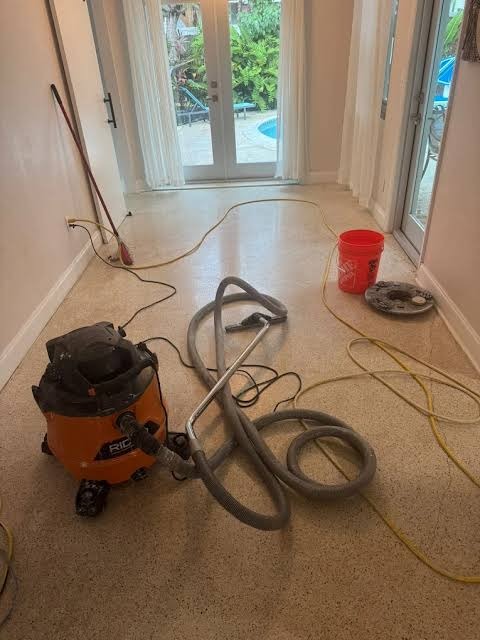
- Surface Spills on Non-Porous Flooring: For tile, sheet vinyl, or sealed concrete, use heavy-duty mops, towels, and a wet-dry shop vacuum to clear surface pooling immediately.
- Saturated Carpeting & Underlayment: Household shop vacuums can remove surface liquid from carpet fibers, but they lack the suction lift to pull moisture out of the dense foam padding beneath. If padding stays saturated for more than 24 hours, carpet backing delaminates and subfloor rot accelerates.
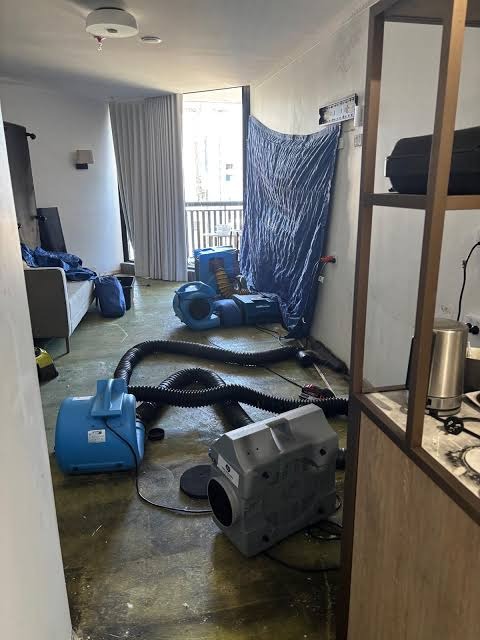
- Mechanical Extraction: For deeper intrusions, restoration crews deploy truck-mounted extractors and weighted sub-surface tools to squeeze liquid directly from carpet pads without tearing up the flooring. Read more on how professional water extraction works or explore our dedicated water extraction services.
3. Remove Baseboards to Vent Wall Cavities
Drywall acts like a sponge, pulling moisture upward through capillary action. One of the most effective water damage cleanup tips for enclosed rooms is removing baseboards:
- Pry Baseboards Gently: Use a putty knife and pry bar to remove wooden or composite baseboards along wet walls without gouging the drywall.
- Inspect for Trapped Moisture: Moisture frequently hides behind baseboards and insulation. Learn how technicians identify signs that water is trapped behind walls.
- Vent the Cavities: In clean water scenarios, drilling small inspection holes into the drywall beneath where the baseboard sits allows air to circulate inside wall cavities. When structural framing is saturated, our specialized wall water damage restoration team uses cavity drying injectors to direct heated dry air directly into the studs.
4. Understand DIY Cleanup vs. Professional Restoration
Knowing what you can safely clean yourself versus where professional equipment is mandatory protects your investment and ensures your insurance claim remains compliant.
🔍 DIY Water Damage Cleanup vs. Professional Restoration
| Cleanup Stage | Standard DIY Approach | Professional Restoration Protocol |
|---|---|---|
| Surface Extraction | Towels, household mop, shop vacuum | High-capacity truck-mounted vacuum & submersible pumps |
| Moisture Diagnostics | Surface touch & visible dampness check | FLIR thermal imaging & deep-probe moisture meters |
| Dehumidification | Opening windows & residential box fans | Commercial Low Grain Refrigerant (LGR) dehumidifiers |
| Cavity Dry-Out | Untreated behind drywall & baseboards | Directed air movers & positive/negative cavity injection |
5. Control Humidity and Airflow Correctly
A common homeowner error is aiming household box fans directly at wet spots while leaving windows open:
- Avoid Opening Windows in Humid Weather: In Houston's humid coastal climate, outdoor relative humidity frequently exceeds 80%. Opening windows pulls humid exterior air into your home, halting evaporation and saturating previously dry drywall.
- Keep Air Conditioning Running: Set your HVAC system to run continuously to circulate air and lower indoor humidity while awaiting industrial equipment.
- Deploy High-Capacity Dehumidification: Genuine structural drying requires industrial Low Grain Refrigerant (LGR) dehumidifiers that drive grains per pound (GPP) below 35, pulling deep moisture out of hardwood and concrete slabs. Discover how long structural drying takes or review our certified structural drying services in Houston.
6. Document Damage Thoroughly for Insurance Claims
Before discarding soaked items or cutting away wet drywall, build an organized record of the incident:
- Take comprehensive date-stamped photos and videos of pooled water, water lines on baseboards, and all damaged personal property.
- Document the origin of the leak, whether caused by an overflowing fixture, a failed appliance supply hose, or an overhead plumbing rupture.
- Avoid throwing away damaged plumbing parts (like a split copper pipe or ruptured supply line) before your insurance adjuster inspects them.
- Professional restoration documentation—such as psychrometric logs and moisture mapping records—provides the empirical proof adjusters require to approve claim payouts.
7. Disinfect and Inhibit Fungal Growth
Once bulk liquid is extracted and surfaces are dry to the touch, sanitization prevents microbial amplification:
- Clean non-porous surfaces with an EPA-registered antimicrobial disinfectant designed for water damage restoration.
- Avoid using standard household bleach on porous lumber or drywall; bleach evaporates quickly on porous surfaces, leaving water behind that can feed fungal roots.
- If water has sat for longer than 48 hours, microscopic mold colonies may have already formed. Specialized antimicrobial wash treatments and HEPA air scrubbing are necessary to restore safe indoor air quality.
What You Should Do Next
Executing the right water damage cleanup tips in the first few hours will save you thousands of dollars in structural repairs. For urgent steps to take right after an incident occurs, explore our guide on what to do after home water damage.
To understand how emergency mitigation differs from post-drying construction repairs, review our detailed guide on water mitigation vs water damage restoration.
Whether your property requires rapid water extraction services, comprehensive water damage mitigation, or round-the-clock emergency water damage restoration, our experienced technicians are ready to assist across Houston, TX and surrounding communities.
Active Water Leak or Flooded Floor?
Don't let standing water soak into subfloors or cause hidden drywall mold. Speak directly with a Houston extraction technician for 30-minute emergency dispatch.