When clean water floods across your floors or drips through an upstairs ceiling, your daily household routine stops. Property owners dealing with sudden plumbing leaks or severe storms immediately ask: How long does water damage restoration take, and when can our property return to normal?
While small, localized leaks caught early can be dried and restored in 3 to 5 days, severe water losses involving multiple rooms or structural demolition typically require 1 to 2 weeks (or longer for extensive rebuilds). Understanding the full timeline of the restoration process helps homeowners set realistic expectations, prevent secondary mold damage, and coordinate smoothly with insurance adjusters.
Below is a detailed guide on how long water damage restoration takes, the five core phases of recovery, the critical factors that alter project duration, and what you can do to accelerate your timeline.
Overview of the Water Damage Restoration Timeline
Water damage recovery is divided into two distinct stages: Mitigation (the emergency dry-out and stabilization phase) and Reconstruction (the repair and rebuild phase).
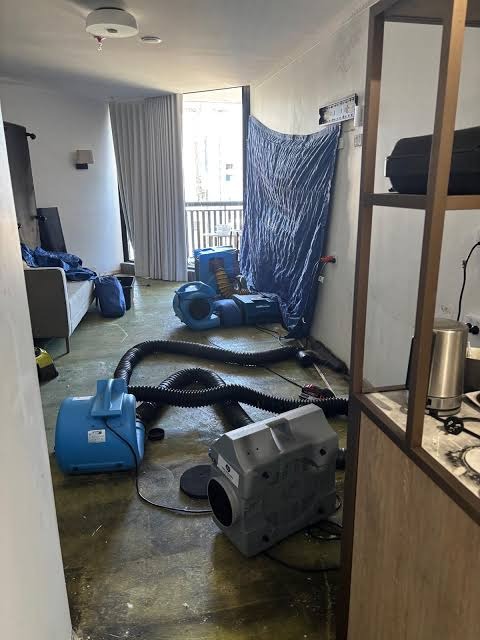
- Emergency Mitigation (Days 1–5): The immediate priority is stopping the leak, extracting standing water, removing unsalvageable materials, and using commercial dehumidifiers to return framing and slabs to baseline dry standards.
- Reconstruction & Repair (Days 5–14+): Once certified moisture readings confirm the building envelope is dry, contractors rebuild drywall, replace baseboards, install new flooring, and repaint.
Need Fast Water Extraction in Houston?
The first 24 to 48 hours determine whether structural materials can be saved or must be torn out. Our 24/7 technicians are on call across Greater Houston to begin immediate water removal.
📞 Call (832) 849-4218 for 24/7 ServiceThe 5 Phases of the Restoration Timeline
To answer how long water damage restoration takes in practice, it helps to examine each phase in sequence:
Phase 1: Inspection & Water Removal (Hours 1–24)
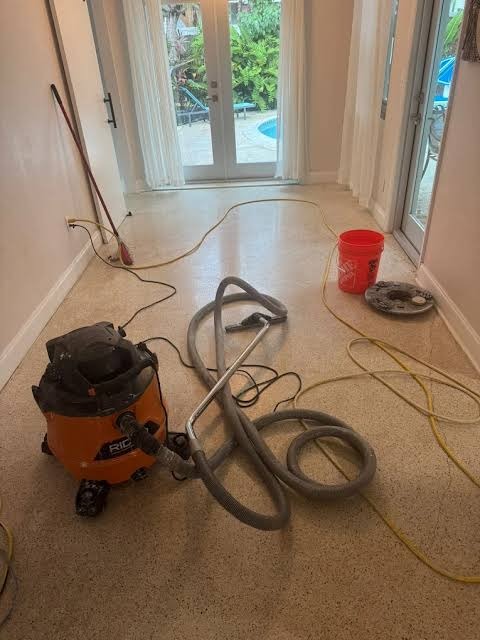
Within hours of arrival, technicians inspect the property using thermal imaging cameras and pinless moisture meters to determine the migration path of the water. Industrial truck-mounted vacuum extractors and submersible pumps remove standing water from floors. Fast mechanical water removal shortens overall drying times. Learn more about specialized water extraction services and how liquid removal limits damage.
Phase 2: Structural Drying & Dehumidification (Days 2–5)
After standing water is gone, deep moisture remains bound inside porous gypsum drywall, baseboards, subflooring, and concrete slabs. High-velocity air movers and Low Grain Refrigerant (LGR) dehumidifiers run continuously to pull moisture from building assemblies into the air stream and condense it into drainage lines. For a deeper look at the science behind this phase, read our guide on how long structural drying takes or review our certified structural drying services in Houston.
Phase 3: Cleaning, Sanitization & Mold Prevention (Days 3–6)
During and immediately following the dry-out, technicians apply EPA-registered antimicrobial disinfectants to all affected surfaces. This step halts bacterial proliferation and prevents mold spores from colonizing damp wall cavities. If walls or insulation absorbed contaminated water, damaged sections are neatly cut away to allow direct air circulation. Review our wall water damage restoration protocols.
Phase 4: Insurance Assessment & Scope Approval (Days 5–10)
For claims involving homeowner insurance, adjusters review the restoration contractor's psychrometric logs, daily moisture readings, and photo documentation. While mitigation work begins immediately to prevent further loss, final reconstruction estimates often take a few days to receive formal insurer authorization.
Phase 5: Rebuilding & Final Repairs (Days 7–14+)
Once moisture meters verify dry standards, reconstruction begins. Tradesmen hang new drywall, tape and float seams, install baseboards, replace flooring, and apply finishing paint coats. Minor patch repairs take 2 to 3 days, while replacing entire hardwood floors or rebuilding collapsed ceilings can take 1 to 2 weeks. Learn more about overhead structural repairs under ceiling water damage restoration.
Expected Timeline by Damage Severity
The duration of your restoration depends heavily on the volume of water and the contamination category:
🔍 Expected Restoration Timeline by Water Damage Level
| Damage Level | Water Source / Category | Drying Time | Total Rebuild Time |
|---|---|---|---|
| Minor Intrusion | Clean supply line (Category 1) / Surface only | 2 to 3 Days | 3 to 5 Days |
| Moderate Damage | Washing machine or dishwasher overflow (Category 2) | 3 to 5 Days | 1 to 2 Weeks |
| Severe Flooding | River/street floodwater or storm runoff (Category 3) | 5 to 8 Days | 2 to 4 Weeks |
| Black Water / Sewage | Sewer line backup or long-standing water | 5 to 7 Days (After demo) | 3 to 6 Weeks |
Key Factors That Alter How Long Restoration Takes
Several key factors determine whether your home is restored in days or weeks:
- Category of Water: Clean tap water from a supply pipe requires far less demolition than contaminated water. If floodwater or sewage enters the property, all porous building materials must be removed and the area sanitized before drying can finish. Read about why floodwater inside a home is dangerous and explore our sewage water cleanup services.
- Density of Saturated Materials: Drywall dries relatively quickly under turbulent airflow. Dense hardwood flooring and thick concrete slab foundations hold onto moisture stubbornly, requiring extended LGR dehumidification or desiccant equipment to reach verified dry standards.
- Houston’s Humid Climate: Outdoor air conditions play a major role. In Houston's humid coastal climate, ambient humidity often tops 80%. Opening windows introduces wet air that halts indoor evaporation. Only industrial dehumidifiers operating in a closed drying chamber can forcefully pull bound moisture from wood studs.
- Speed of Initial Response: Mold spores germinate in damp drywall within 24 to 48 hours. A delay in extracting water turns a simple 3-day drying job into a complex mold remediation project that can add weeks to the schedule.
- Insurance Claim Coordination: Contractors who provide detailed moisture mapping logs and photographic evidence help adjusters approve repair scopes faster, avoiding paperwork delays.
Actionable Steps to Speed Up Your Restoration Timeline
Homeowners can take proactive steps to prevent delays:
- Shut Off the Water Source Immediately: Locate your main shut-off valve to stop the flow of water within minutes of discovery.
- Do Not Shut Off Drying Equipment: Even if the room feels warm and dry, wooden studs inside walls take days to release trapped moisture. Turning off fans early traps moisture and restarts fungal growth.
- Follow Safe Cleanup Protocols: Review our comprehensive water damage cleanup tips to avoid common mistakes like using household bleach on porous framing lumber.
- Take Immediate First Steps: Refer to our emergency guide on what to do after home water damage to safely protect belongings and avoid electrical shock hazards.
What You Should Do Next
Knowing how long water damage restoration takes allows you to make informed decisions and safeguard your property. The most critical factor in keeping your timeline short is acting during the first 24 hours.
To learn more about the difference between emergency dry-out and long-term rebuilding, read our guide on water mitigation vs water damage restoration.
If your home or commercial building is experiencing active water damage, contact our certified restoration specialists. We provide rapid emergency water damage restoration, specialized water damage mitigation, and structural dry-out services throughout Houston, TX and surrounding communities.
Active Water Leak or Flooded Floor?
Don't let standing water soak into subfloors or cause hidden drywall mold. Speak directly with a Houston extraction technician for 30-minute emergency dispatch.